WordPress Maintenance Services – 5 Deadly Risks
If you rely on standard WordPress maintenance services for a custom-built site, you are playing a dangerous game. Most WordPress maintenance services are designed for generic, off-the-shelf websites — not precision-engineered platforms with custom APIs, bespoke logic, and hand-coded frontends.
The result? Silent failures, performance decay, and revenue loss that standard agencies never even detect. Below are the 5 critical risks that make generic WordPress maintenance services the biggest threat to your custom site.
Your custom WordPress site is not a blog. It is a software application — and it deserves to be treated like one. Below are 5 ways standard maintenance agencies are silently destroying custom sites every single day.
The $20,000 “White Screen” Disaster
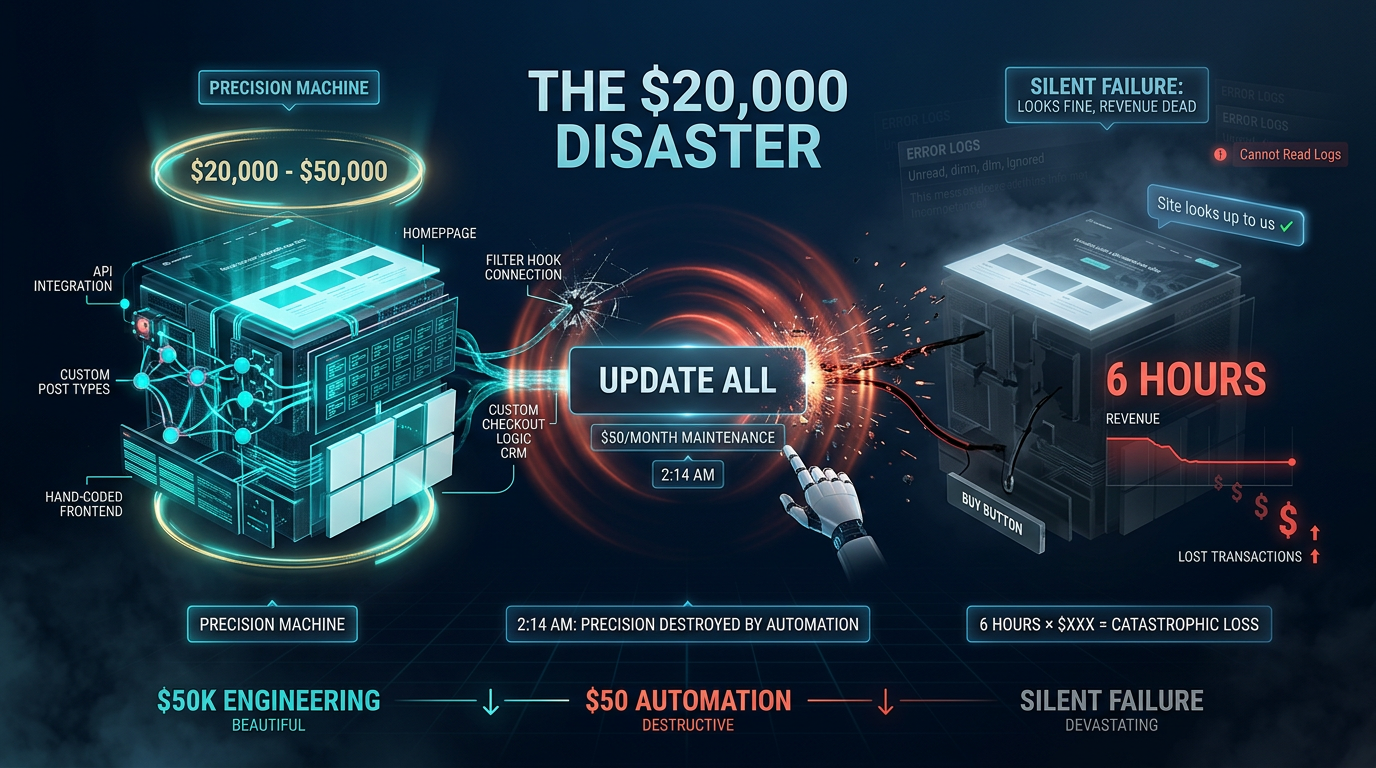
You spent $20,000—maybe $50,000—building a high-performance custom WordPress site — complete with bespoke API integrations, custom post types, and a lean hand-coded frontend.
Then, you handed the keys to a $50/month “maintenance” agency and assumed the job was done.
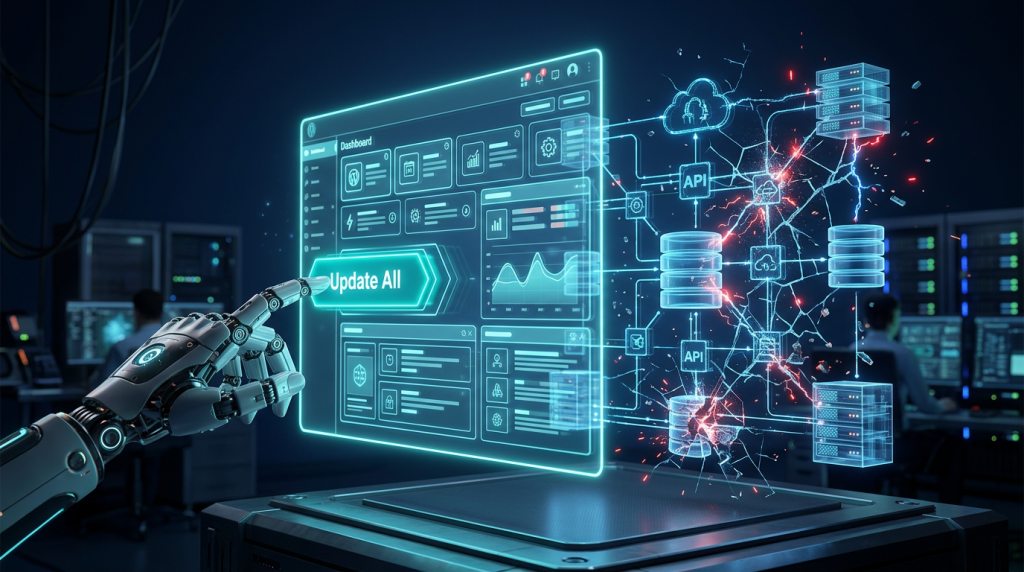
Last Tuesday at 2:14 AM, their automated script did exactly what you paid it to do: it clicked “Update All.”
No review, no testing, no warning.
A minor update to a core plugin silently changed a filter hook your custom checkout logic depended on. Technically, the site never “crashed” — the homepage still loaded fine. However, the “Buy” button stopped sending data to your CRM entirely.
By 8:00 AM, you had already lost six hours of sales. When you messaged the agency, their response was: “The site looks up to us.” Worse, they never checked the error logs — because, frankly, they don’t know how to read them.
This is the everyday reality of the “Plugin-Clicker” industry. They treat your site like a $500 brochure site. That is a costly mistake, Routine maintenance becomes a slow disaster.
The Engineering Gap in WordPress Maintenance Services
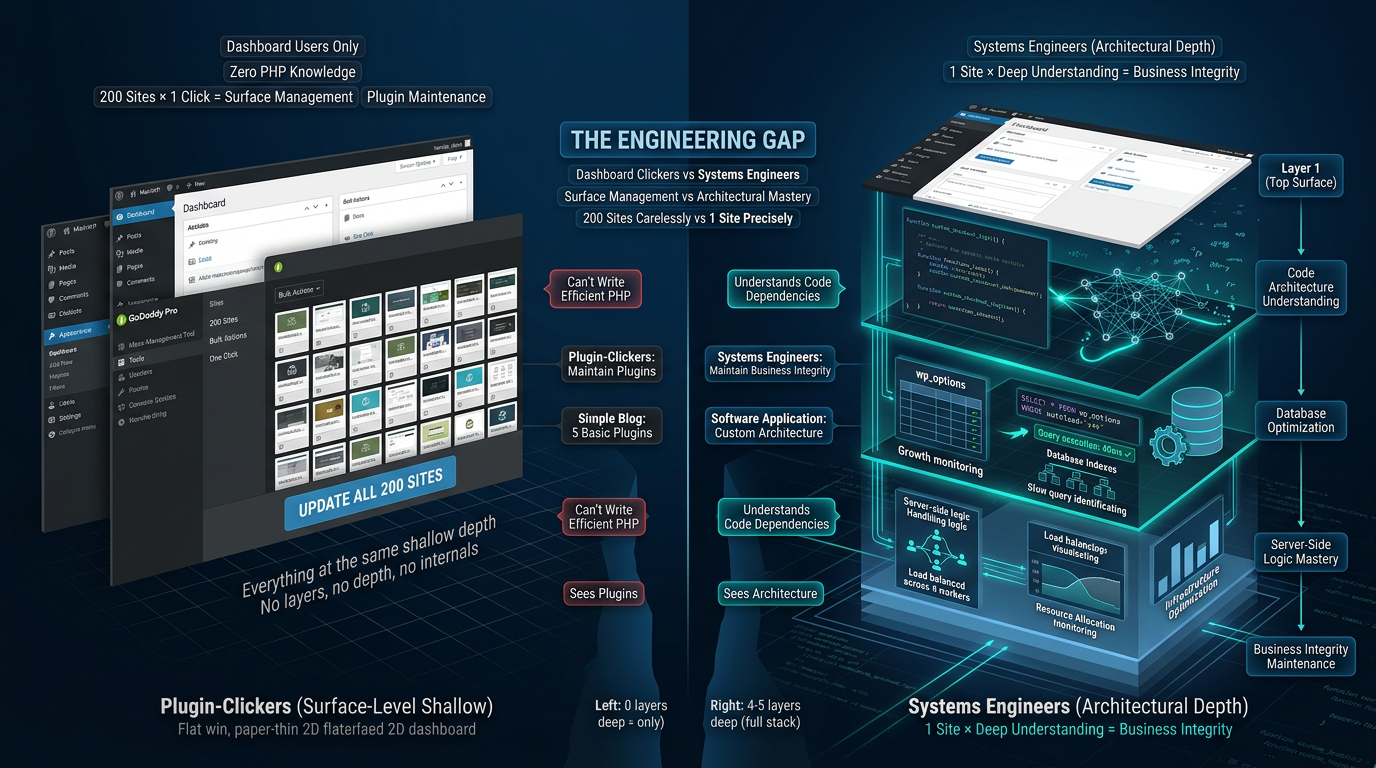
To be direct: most WordPress maintenance services are operated by dashboard users — not engineers. Rather than writing code, they use tools like MainWP or GoDaddy Pro to push updates across 200 sites simultaneously with a single click.
For a basic site built on an off-the-shelf Astra theme, that approach is acceptable. However, if your site is custom-built, you are not running a blog — you are running a software application. The stakes are fundamentally different.
An engineering-level partner thinks differently. Plugins are not what we see — code dependencies are. From there, we track how your wp_options table grows, how your server-side logic handles concurrent users, and precisely why a database query takes 400ms instead of 40ms.
Standard agencies maintain plugins. WPscaleops maintains your business integrity. One missed hook conflict can wipe out days of revenue — and they won’t even know it happened.
Risk #1: How WordPress Maintenance Services Break Custom Logic
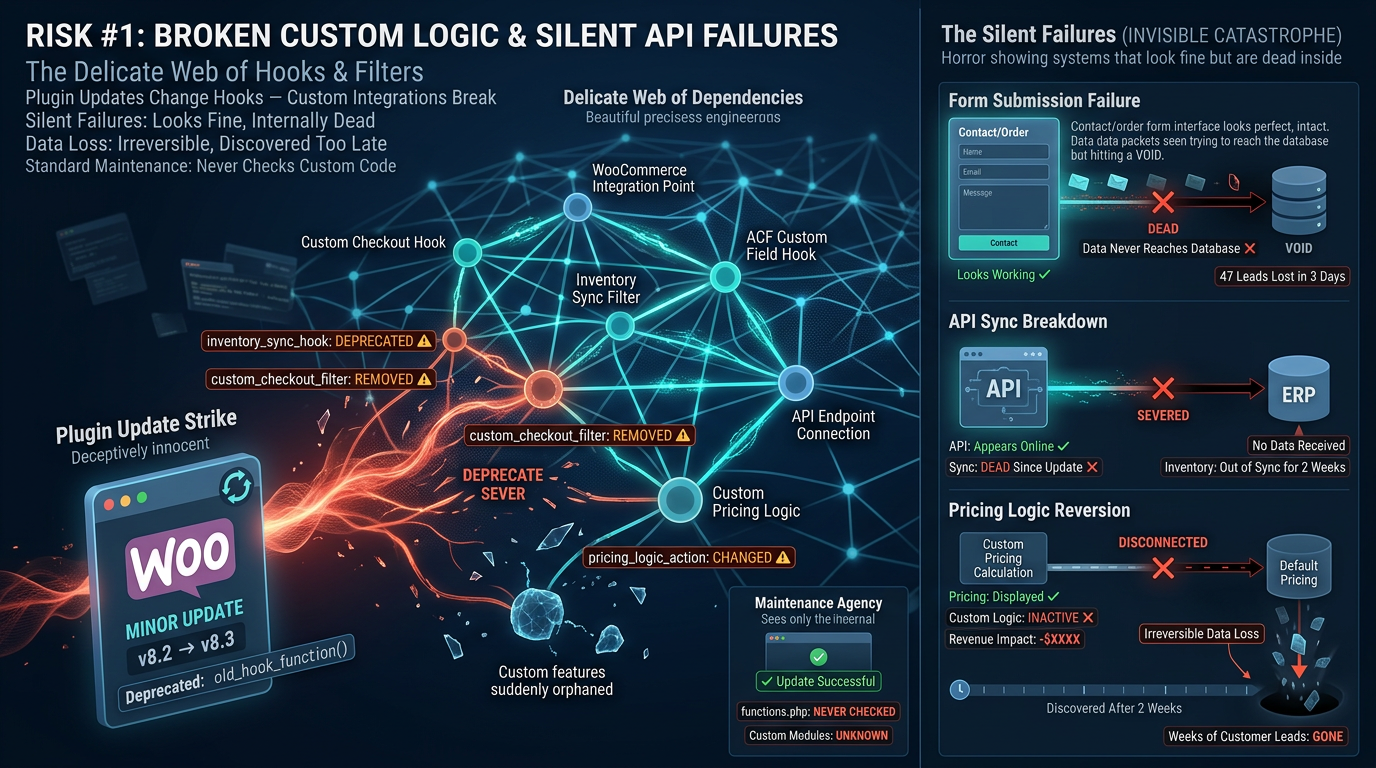
Custom sites rely on a delicate web of “hooks” and “filters.” Specifically, when an engineer builds a custom feature, they hook into a plugin like WooCommerce or ACF to extend its behavior.
Here is the problem: plugin developers change those hooks constantly. As a result, what worked perfectly last month can silently break today.
Unfortunately, a standard maintenance agency will never check your functions.php before hitting update. They simply don’t know that a “minor” WooCommerce patch just deprecated the exact function your inventory sync relies on. In fact, they won’t even look.
The result? Silent Failures.
- Forms look like they are working, but the data never reaches the database.
- The API stops syncing with your ERP entirely.
- Custom pricing logic silently reverts to default.
By the time you catch it, the data loss is often irreversible. We’ve seen businesses lose weeks of customer leads because their maintenance “partner” was just a guy with an update script.
Risk #2: Performance Decay (The Technical Debt Tax)
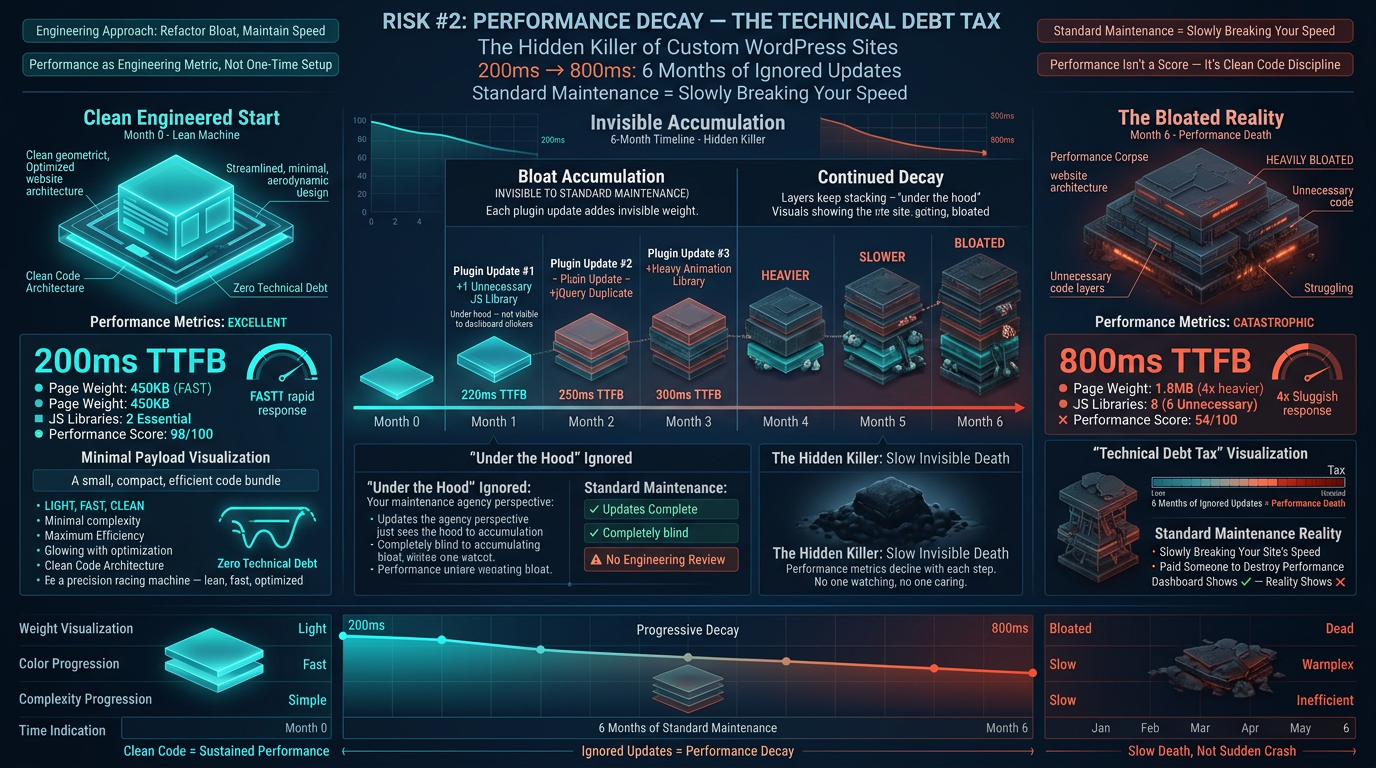
Technical debt is the “hidden killer” of custom WordPress sites. Every unreviewed plugin update makes your site a little heavier. Over time, that weight becomes a serious performance liability.
Standard maintenance ignores everything under the hood. They don’t care if a plugin update silently adds three unnecessary JS libraries to your header. Moreover, they won’t notice when your TTFB creeps from 200ms to 800ms over six months — until Google does.
At WPscaleops, however, we treat performance as a core engineering metric. If an update bloats your frontend, we don’t accept it. Instead, we refactor the implementation to find a leaner path. Performance is not a Lighthouse score — it is the result of clean code and zero technical debt. Therefore, standard maintenance is simply a slow way to pay someone to break your site’s speed.
Risk #3: The “Staging-less” Nightmare
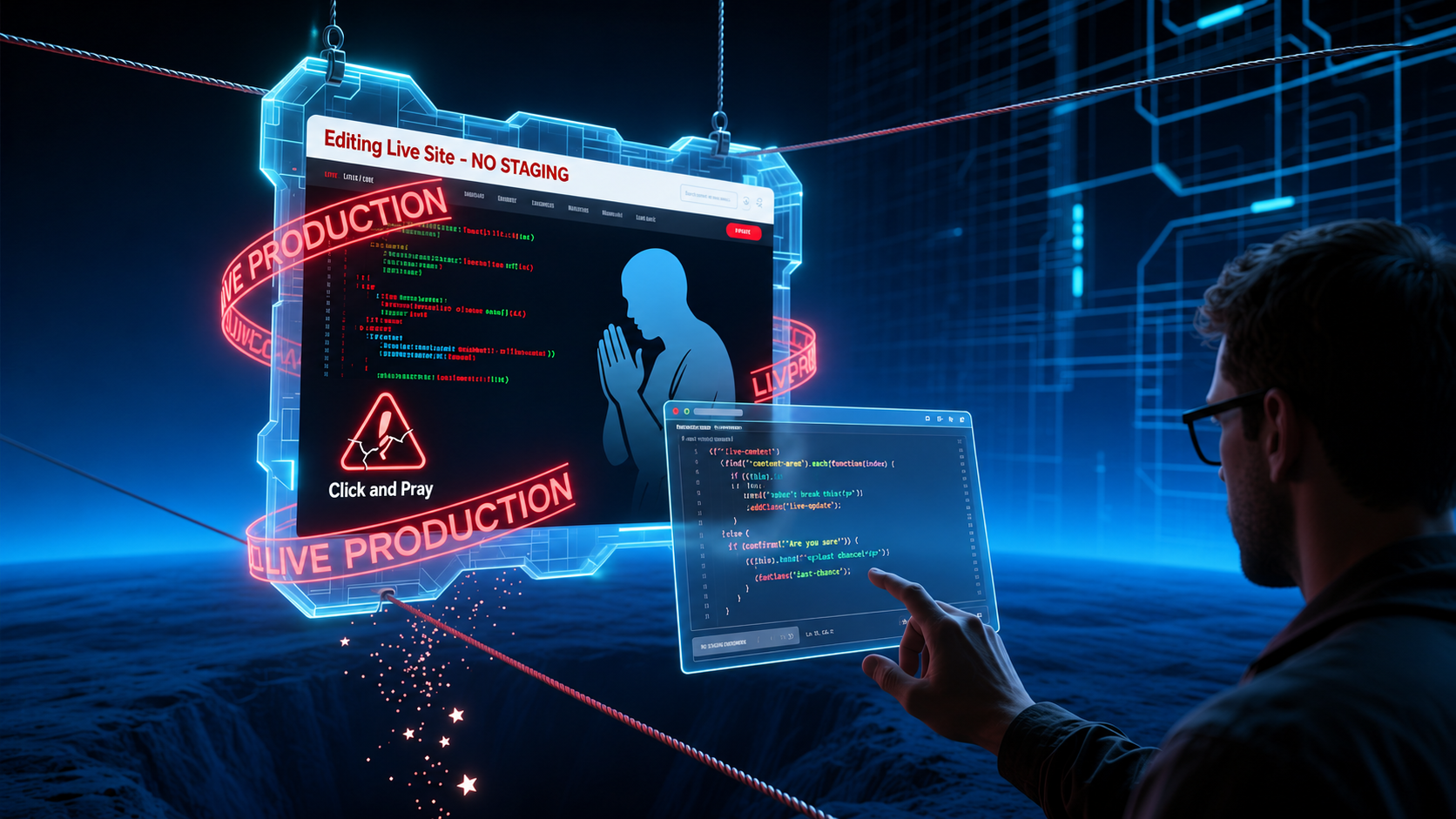
To put it plainly: live site edits are a dealbreaker. If your provider makes changes directly on production — end that relationship immediately.
Editing a live site is the clearest sign of an amateur operation. A single misplaced semicolon in a PHP file triggers a Fatal Error. As a result, your entire site goes offline with zero warning.
Professional enterprise WordPress support, therefore, requires a strict Git-based workflow. Specifically, this means:
- Local Development: Engineers work on a local copy.
- Staging: Updates are pushed to a staging environment that mirrors your live server exactly.
- QA: We run “Smoke Tests” to ensure the custom checkout, the API, and the login flow still work.
- Deployment: Only then is the code “pushed” to production.
Standard agencies skip this entirely. The reason is simple — a proper deployment pipeline requires skill they don’t have and time they won’t spend. Your live site becomes their testing environment, that is not maintenance, that is gambling.
Risk #4: Security Gaps in Generic Firewalls
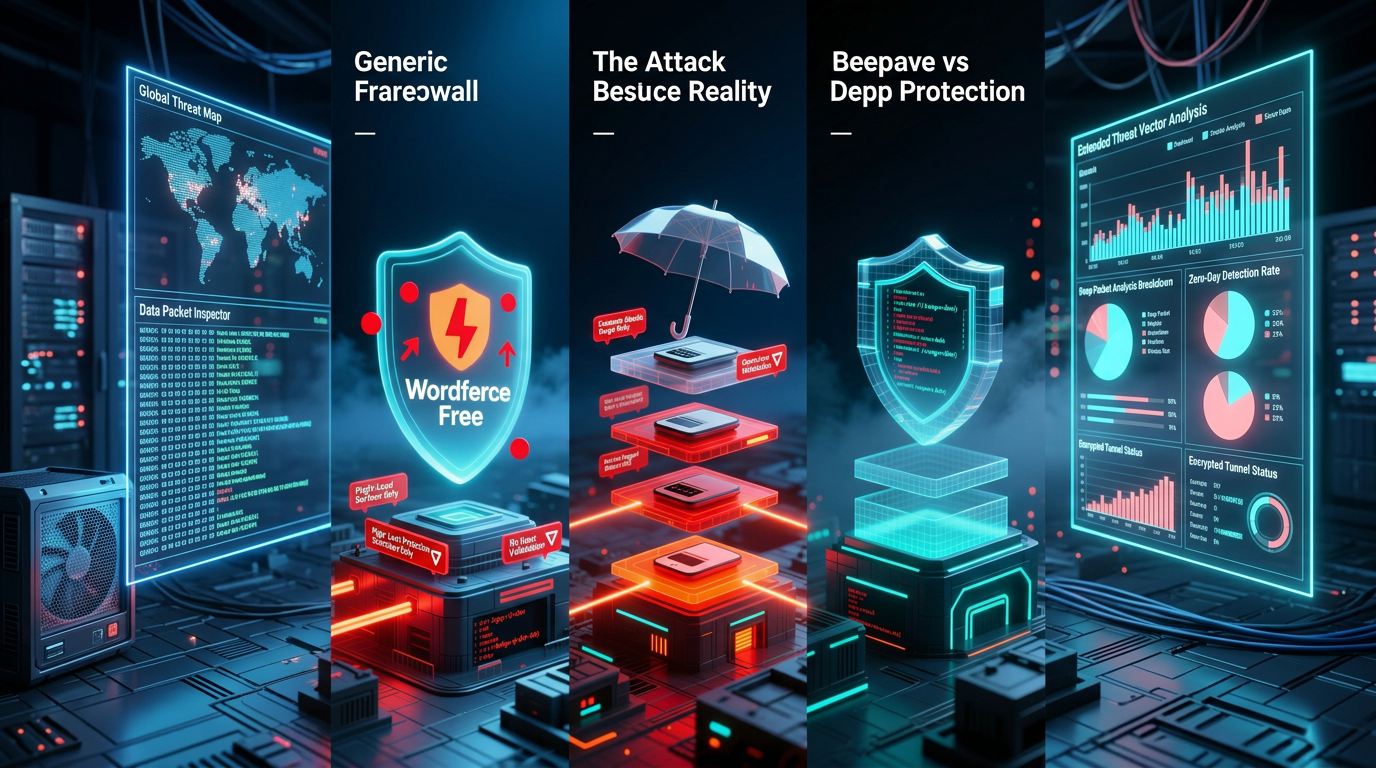
Most maintenance plans brag about “Security Monitoring.” In reality, that means they installed the free version of Wordfence and called it a day.
Generic firewalls stop generic attacks. However, they are completely useless against vulnerabilities hiding inside your custom code. For example, if a developer wrote a custom REST endpoint without properly sanitizing input, no generic plugin will catch that exploit.
White-glove WordPress support works differently. First, we map your specific attack surface. Then, we audit every custom REST API endpoint. Finally, we harden your Nginx/Apache configuration at the server level — making plugin firewalls largely redundant.
The bottom line is simple: custom sites need bespoke security, not a checkbox plugin.
Risk #5: Database Bloat from Poor WordPress Maintenance Services
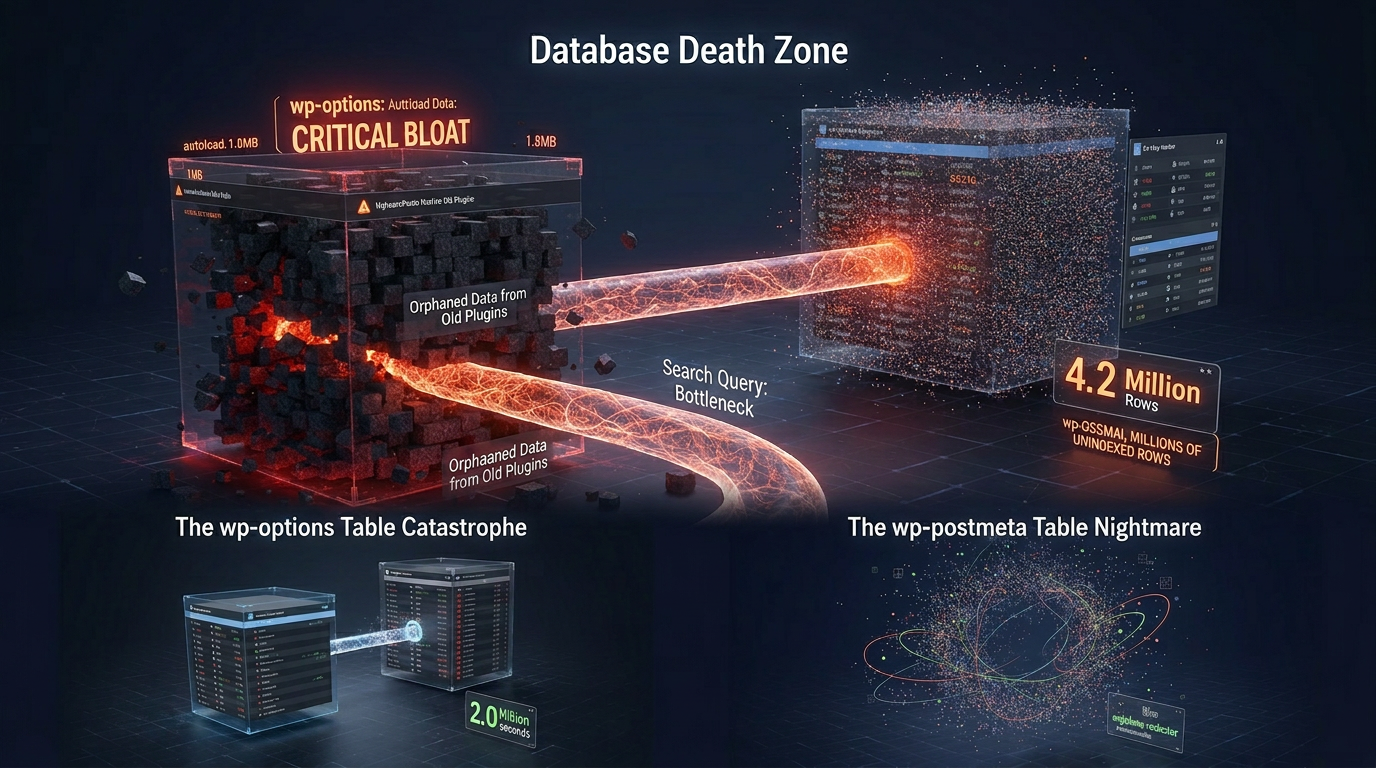
The WordPress database is where custom sites go to die slowly. Over time, your wp_options table fills with orphaned data from deleted plugins. Meanwhile, your wp_postmeta table accumulates millions of unindexed rows that drag every query down.
Standard maintenance never touches the database structure. At best, they run a plugin that fires a basic OPTIMIZE TABLE command. That is the database equivalent of spraying air freshener in a burning building — it does nothing meaningful.
True WordPress database optimization requires an engineer to look at the Slow Query Log.
- Why is that search query taking 2 seconds?
- Do we need a custom index?
- Is the
autoloaddata inwp_optionsover 1MB?
We don’t just “clean” your database; we refactor how your site talks to it. This is the difference between an oil change and a full engine rebuild.
Standard Maintenance vs. WPscaleops Engineering
| Feature | Standard “Plugin-Clicker” | WPscaleops Engineering Partner |
|---|---|---|
| Workflow | Click “Update” on live site | Git-based, Staging-first deployment |
| Custom Code | Ignored until it breaks | Dependency mapping & code audit |
| Database | Basic plugin “cleanup” | Query optimization & index refactoring |
| Performance | “Site is up” monitoring | Core Web Vitals & Server response tracking |
| Security | Generic plugin (Wordfence) | Custom WAF rules & endpoint hardening |
| Updates | Automated / Scheduled | Manual review + Smoke testing |
| Pricing Model | Hourly or cheap retainer | Resolution-based (Outcome focused) |
The Right WordPress Maintenance Services: Custom WP Engineering
WPscaleops was not built to compete with $50/month agencies —it was built to replace them entirely. Our Professional Plan ($1,500/mo) is specifically designed for businesses where the website is a direct revenue driver — not a side project. Consequently, we don’t simply “maintain” your site. Instead, we engineer it for long-term scale and stability.
The Resolution-Based Difference: You don’t pay us to “try” and fix something. You pay for the resolution. Our goal is to make your site so stable that support tickets become a thing of the past.
- Git-Based Deployment: Every change is tracked and version-controlled.
- Staging Environments: Zero risk to production traffic.
- Human-First Engineering: Direct line to a Senior Systems Engineer who knows your code.
Frequently Asked Questions
Will cheap WordPress maintenance services break my custom code?
If you rely on standard WordPress maintenance services, yes. Eventually, a plugin update will conflict with your custom logic. At WPscaleops, we perform dependency audits before every update cycle to identify these conflicts in staging, fixing them before they ever reach your live site.
Why is resolution-based support better than hourly billing?
Hourly billing rewards inefficiency. The longer an agency takes to fix a mistake they probably made, the more you pay. Resolution-based support aligns our goals: we want your site to be perfect so we can focus on high-level custom WP engineering, not repetitive fixes.
How do WordPress maintenance services impact SEO?
Google ranks sites based on Core Web Vitals (speed, stability, and responsiveness). Professional engineering prevents the performance decay that kills your rankings. By optimizing your database and reducing server response times, we ensure your site stays in Google’s “green zone.”
What happens if an update fails?
it won’t reach production. Every update goes through staging first. If something breaks, it breaks there — not on your live site. And if a silent issue somehow slips through, one Git command rolls everything back in seconds. No panic, no downtime, no emergency calls at 2 AM.
Stop Gambling on the Wrong WordPress Maintenance Services.
Custom sites deserve better than deferred disaster. You are paying someone to wait for your site to break. Switch to a partner who understands server-side logic, database architecture, and the high cost of downtime.
Every day you stay with a plugin-clicker agency is another 2 AM update waiting to happen. Our Professional Plan ($1,500/mo) gives you the only thing that actually protects a custom site — engineers who understand it.