
Custom WordPress Development: Why One Size Doesn’t Fit All
Most businesses don’t need a generic theme—they need a website that works as hard as they do. Off-the-shelf WordPress themes promise speed and simplicity, but they often deliver bloated code, slow load times, and a look that blends into every competitor’s site. The real cost of that shortcut isn’t just lost visitors—it’s lost revenue, damaged credibility, and a platform that fights your growth at every turn. In this guide, you’ll learn exactly what custom WordPress development involves, how bespoke WordPress themes solve problems templates can’t, and how to decide if going custom is the right move for your business.
What Is Custom WordPress Development? (And What It Isn’t)
Custom WordPress development means building a website from the ground up to match your exact business needs. This includes bespoke WordPress themes, custom plugins, and tailored functionality that page builders and pre-coded themes simply can’t provide.
What does custom WordPress development actually include?
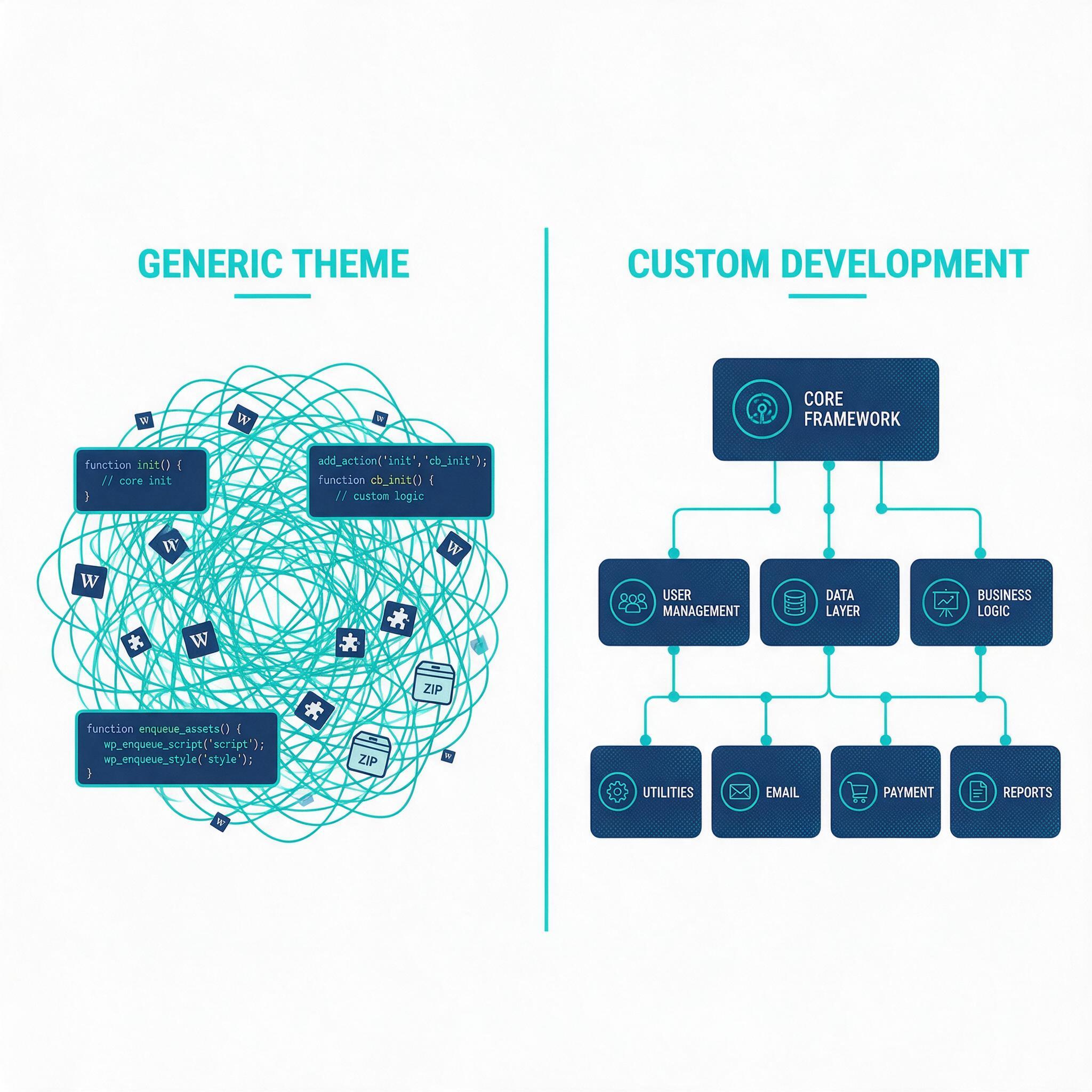
It covers writing original code for themes, plugins, and site features—not just assembling pre-built blocks. A developer starts with a blank file and engineers everything to your specifications: unique layouts, complex workflows, integrations, performance optimizations. No bloat. No unused CSS. Every line serves a purpose.
How is custom development different from using a page builder?
Page builders like Elementor or WPBakery let you drag and drop—that’s configuration, not development. You’re limited to what the plugin offers. Custom development removes those limits. Need a checkout process that syncs with a legacy CRM? Want a membership system with custom pricing tiers? Pre-coded themes can’t deliver. Custom code can.
What are the common myths about custom WordPress development?
Myth one: “Custom is only for enterprise.” Small and mid-size businesses benefit just as much—especially when off-the-shelf solutions can’t handle their specific workflows. Myth two: “Custom is always slow.” Poorly written code is slow, regardless of origin. Good custom development is optimized from the start. Myth three: “Custom is too expensive.” It’s an investment. A generic theme requires constant workarounds and updates. Bespoke WordPress themes eliminate that friction. Custom development doesn’t mean reinventing the wheel—it means engineering the right wheel for your vehicle.
The Real Cost of One-Size-Fits-All Themes
Why do generic WordPress themes slow your site down?
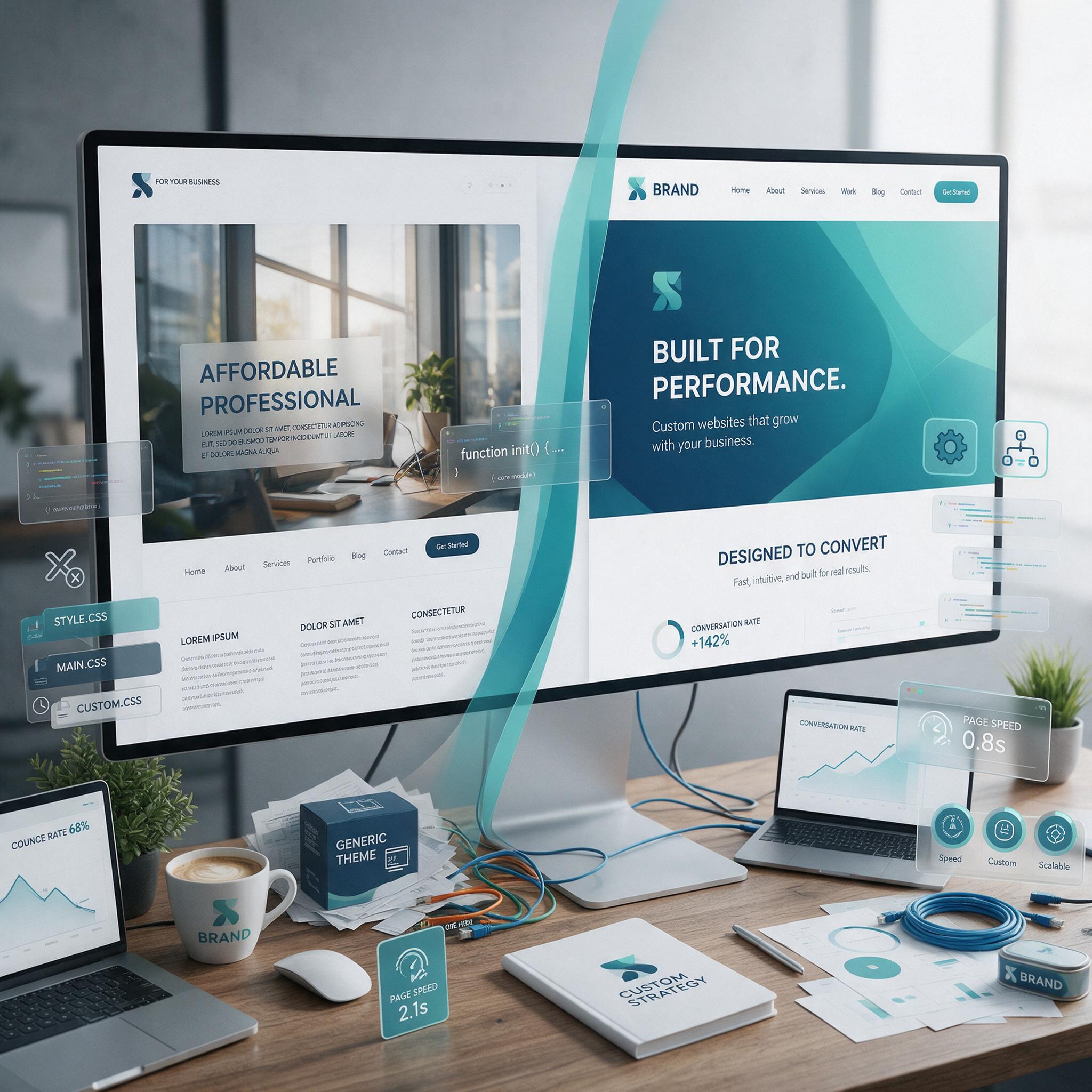
Generic themes pack in features you don’t need—slideshow galleries, portfolio layouts, multiple header styles, a dozen font options. That code loads on every page even when you use none of it. Add the bundled plugins, and your site drags under its own weight. Each unnecessary HTTP request adds milliseconds. Those add up to seconds. On a 3-second load, you lose 32% of visitors. Bloating from unused functionality is the main reason off-the-shelf themes underperform compared to bespoke WordPress themes, which ship only what you actually need.
How do template themes hurt your SEO and conversions?
Page speed is a direct ranking factor. Slow themes damage Core Web Vitals scores—Google’s key user-experience metric. Poor schema markup is another issue: most templates use generic structured data you can’t customize for local business, product, or reviews without hacking the theme. On the conversion side, every second of delay drops customer satisfaction by 16%. A theme built for visual flair over performance repels visitors before they click. Custom WordPress development solves this with performance-first code and precise schema tailored to your content.
What are the hidden security risks of off-the-shelf themes?
Custom WordPress Development: Why One Size Doesn’t Fit All
What are the hidden security risks of off-the-shelf themes?
Popular off-the-shelf themes are prime targets for automated attacks. Hackers scan for known vulnerabilities in widely used templates, and a single exploit can compromise thousands of sites running the same code. These themes often bundle features you don’t need—sliders, page builders, extra scripts—each one a potential entry point. Even when unused, that code remains active, widening your attack surface.
Custom WordPress development eliminates this problem by design. With bespoke WordPress themes, your site includes only the functionality you require. No unused plugins, no extraneous theme files. Every line of code serves a purpose, drastically reducing the number of vectors an attacker can exploit. This is not a “security plugin” fix; it’s a fundamental architectural advantage.
Custom code also bakes in security best practices from the start. Instead of patching vulnerabilities after discovery, developers apply secure coding standards during initial development—input validation, proper database queries, controlled authentication. Updates are predictable and manageable because you control the codebase. There is no waiting for a theme vendor to issue a fix for a critical flaw.
WPSCALEOPS pairs this custom foundation with 24/7 security management—real-time monitoring, automated threat responses, and proactive audits. But the first line of defense is the custom build itself. A bespoke theme, built with security from day one, is inherently harder to breach than any off-the-shelf template was ever designed to be.
How Bespoke WordPress Themes Solve Real Business Challenges
How do bespoke themes align with your brand identity?
Off-the-shelf themes force your business into a pre-built mold. They come with design assumptions baked in—color placements, layout grids, typography hierarchies—that have nothing to do with how your customers see you. A bespoke WordPress theme starts from your visual identity instead. Your logo, your brand colors, your tone of voice—these drive the design decisions, not a template author’s guess about what looks good. The result is a site that feels unmistakably yours, from the first scroll to the final conversion form. No generic hero sections. No “we also sell things” layouts that look like every other business in your vertical.
Can custom development improve your website’s scalability?
Template themes are built to handle average traffic on average hosting. They load dozens of scripts for features you never use, and every one of those scripts is a potential bottleneck when your traffic spikes. Custom WordPress development strips away what you don’t need and optimizes what remains. The codebase is clean, modular, and built to scale—whether that means handling a product launch surge or adding new features next quarter. When your business grows, your website grows with it. When you’re stuck on a template, growth means a full rebuild.
How does custom functionality streamline your workflows?
Custom WordPress Development: When Is It Worth the Investment?
Your site is slow. You’re stacking plugins to patch gaps the theme should have covered. Updates break your layout, and a simple text change requires a developer’s calendar. These are the clearest signs your current setup is costing you more than it saves. When you can’t make changes without breaking something, or your theme’s bloat drags every page down, you’ve outgrown the template. That’s the moment custom WordPress development stops being a luxury and starts being the practical fix.
How do you calculate the ROI of custom WordPress development?
Run the numbers on what a slow, broken site actually costs. Factor in the time you spend fighting plugins, the conversions lost to lag, and the revenue that disappears during downtime. Add the maintenance hours you’ll never get back. A custom build pays for itself when the math shows you’re losing more to the current setup than you’d spend fixing it. Reduced maintenance costs alone often justify the investment within a year.
What are the alternatives to full custom development?
Be honest—custom isn’t for everyone. If your needs are simple and your budget is tight, a lightweight theme with a child theme gets you most of the way there. A hybrid approach works too: start with a solid foundation, then commission bespoke WordPress themes or plugins only for the features that directly impact revenue. You don’t need custom everything. You need custom where it counts.
That’s where a partner who tells you the truth matters. The right call isn’t always the most expensive one. It’s the one that eliminates the headaches and lets you focus on the work that grows your business.
The Hidden Maintenance Trap of Custom-Built Sites
Why do custom WordPress sites require specialized maintenance?
Custom code isn’t a set-and-forget asset. Every WordPress core update, plugin revision, or security patch can interact with your bespoke WordPress themes in unexpected ways. A template built for a generic audience doesn’t need the same attention—but your custom architecture does. It’s living code, and living code needs regular checkups: performance tuning, security hardening, and compatibility testing. Skip that, and you’re not saving money—you’re deferring risk.
What happens when you don’t maintain a custom site?
Neglect shows up fast. An outdated plugin opens a door for attackers, and a security breach on a custom site is messier to clean than on a stock install. Broken functionality appears without warning—a form stops submitting, a checkout flow fails—and that’s when downtime hits. Lost customers, damaged credibility, and a scramble to fix what should have been prevented. The cost of reactive repairs always exceeds the price of proactive care.
How does WPSCALEOPS handle custom site maintenance differently?
Generic maintenance plans treat every site the same, which is exactly why they fail on custom architecture. WPSCALEOPS takes a resolution-based approach—we don’t just apply updates, we verify they work within your unique codebase. Our proactive monitoring catches issues before they become outages, and our team understands the logic behind your bespoke WordPress themes. That’s the difference between a patched site and a protected one. You get peace of mind, knowing your platform stays fast, secure, and fully operational—so you can focus on your business, not your website.
How to Choose the Right Custom WordPress Development Partner
Finding the right custom WordPress development partner starts with asking the right questions. You’re not just hiring someone to write code—you’re choosing who understands your business logic well enough to build around it.
What questions should you ask a custom WordPress developer?
Ask about their experience with custom builds specifically, not just WordPress in general. How do they approach security? What’s their process for handling core updates without breaking your bespoke WordPress themes? And critically, how do they communicate—do you get direct access, or are you routed through a project manager? Their answers tell you whether they treat your project like a transaction or a partnership.
What red flags should you watch out for?
Walk away from developers who lean on page builders to deliver “custom” work—that’s a template with a different paint job. Refusal to document code is another warning sign; you’ll own that codebase, and undocumented code is a liability. And if there’s no post-launch support offering, you’re being set up to fail. A site isn’t a finished product, it’s a living system that needs care.
Why does ongoing support matter more than the initial build?
The launch is where the relationship starts, not ends. The real value of a custom WordPress development partner shows up months later, when an update threatens to break something or traffic spikes and the site needs to hold. WPSCALEOPS operates as a dedicated engineering partner, not a vendor. We bring deep WordPress expertise, proactive security management, and tailored maintenance that adapts to your architecture—so your site keeps performing long after the celebratory launch email.
Your WordPress site shouldn’t be a compromise between what you need and what a theme template offers. Custom development closes that gap — but only when it’s built, maintained, and scaled by people who understand the architecture behind it. That’s where WPSCALEOPS comes in. We build bespoke WordPress themes and plugins around your exact workflows, then back them with maintenance plans that keep security, speed, and uptime in check — so your site stays a growth asset, not a recurring headache. If you’re ready to see what a custom build actually looks like when it’s engineered for your business, book a free consultation at wpscaleops.com.